Amyloid PET CT of the brain is an advanced imaging scan that can help diagnose Alzheimer’s disease. It detects the presence of amyloid plaque deposits, an early biomarker of Alzheimer’s disease.
How can Amyloid PET CT be helpful?
Amyloid PET CT may be useful for determining treatment options, including amyloid-targeting therapies. It can also be used to monitor response to treatment, which may reduce overall treatment time.
How does Alzheimer’s disease affect your brain?
Alzheimer’s disease is a common neurodegenerative disease. It can affect memory, thinking, communication and behaviour. Symptoms get worse over time. It’s the most common form of dementia, accounting for 60 to 80 percent. Most people diagnosed with Alzheimer’s disease are over 65. In someone younger than 65, it’s called early-onset Alzheimer’s.
How do amyloid plaques develop in the brain?
Amyloid beta precursor protein (APP) is normally found in the fatty membrane surrounding nerve cells in the brain. It plays a key role in cell growth and repair. APP is broken down naturally by enzymes, before being cleared from the body.
In some brains, a small part of the protein remains, leading to deposits called amyloid plaques. The plaques form clumps between nerve cells in the brain, blocking communication pathways. A buildup of amyloid plaque can eventually kill neurons and cause cognitive decline.
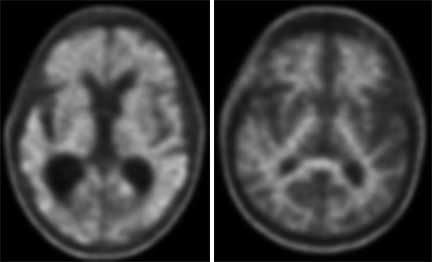
Positive (left) & negative (right) PET studies for Amyloid.
What type of radiotracer is used?
Our Amyloid PET CT scans use a Health Canada-approved radiotracer called florbetaben F-18 (Neuraceq). A radiotracer contains a small, safe amount of radioactive material.
How does the radiotracer work?
The radiotracer contains a radioisotope that binds to beta-amyloid plaques in the brain. The PET CT scanner picks up signals from the radiotracer to create detailed 3-D images.
Where is the radiotracer produced?
Neuraceq is produced in a facility in Ontario. This type of radiotracer has a short “half-life,” meaning it must be used soon after it’s made. The radiotracer is transported by air to Edmonton and must be used the same day.
Where can I book my Amyloid PET CT?
MIC is the only community-based clinic in Alberta that offers this type of advanced diagnostic imaging. Amyloid PET CT is performed at our Century Park clinic. You can discuss this option with your healthcare provider. If medically indicated, you will need a requisition to book your appointment.
Comparing Amyloid PET CT and FDG PET CT
While both exams look at brain health using a hybrid PET CT machine, there are key differences.
Amyloid PET CT uses a radiotracer to detect amyloid plaques in the brain. It can aid in the diagnosis of Alzheimer’s disease.
Not everyone who has amyloid plaque will develop Alzheimer’s disease. However, the test is highly sensitive and can rule out Alzheimer’s.
It also helps your healthcare provider determine eligibility for – and monitor – amyloid-targeted therapies.
FDG PET CT uses a different radiotracer to show how areas of the brain are working (or metabolizing glucose). It can help confirm and differentiate types of dementia.
Sometimes, your healthcare provider may find it useful to have information from both of these exams.
Cases Where Amyloid PET CT May be Beneficial
Your healthcare provider may discuss this imaging option with you. It may be medically indicated for:
Patients under 65
Atypical presentations of dementia
Cases of Mild Cognitive Impairment (MCI) without a diagnosis
To differentiate Alzheimer’s from other types of dementia
To manage patient care, including the use of emerging amyloid-targeted treatments
What to Expect During an Amyloid PET CT Scan
Our staff will explain the process and go through a checklist with you.
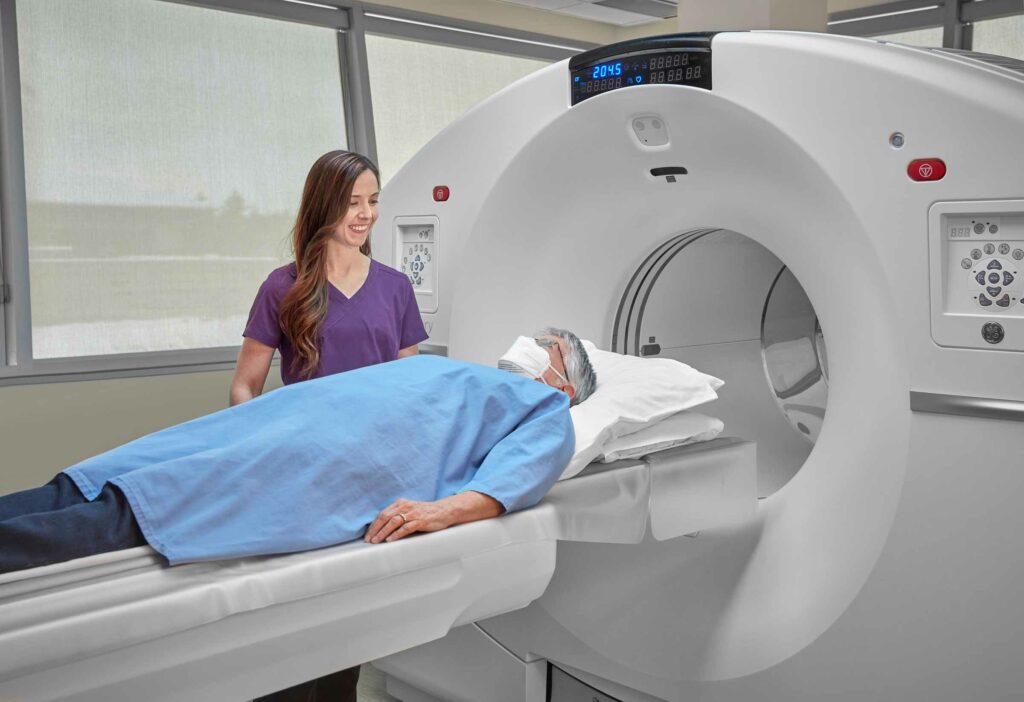
A technologist or nurse will start an intravenous (IV) line to inject the radiotracer.
You’ll be asked to rest quietly for 45 to 130 minutes before the scan. This allows the radiotracer to move through your body and bind to any amyloid plaques.
The scan typically takes 15 to 20 minutes.
What To Expect After the Exam
You should be able to return to normal activities.
Most patients do not experience adverse side effects.
A tiny amount of radiotracer may remain for up to 24 hours after injection.
Drink plenty of water to help clear the radiotracer from your body.
How Much Does an Amyloid PET CT Scan Cost?
MIC uses Amyloid PET CT imaging in brain (neurology) imaging. Currently, Amyloid PET CT imaging used in neurology applications is not covered by the Alberta Health Care Insurance Plan (AHCIP) when performed in a community-based clinic outside the hospital. Routine use of Amyloid PET CT has not been established in Canada, and access is mainly through clinical trials, private healthcare, and registries. The cost of an Amyloid PET CT scan at MIC is as follows:
PET CT Imaging Exam
Cost
Amyloid PET CT
$3,999.00
Please note:
Our dual-trained radiologist and nuclear medicine physicians will protocol all requisitions to ensure an accurate price estimate.
Patients are encouraged to talk to their employer or a Benefits Specialist before booking their exam to see if they qualify for extended coverage. Some extended benefits programs or health spending accounts may cover a portion or possibly the entire exam fee.
What if I Live Outside of Edmonton and Want to Book a PET CT?
MIC is proud to be the first provider in Alberta and only the second in Western Canada to offer PET CT imaging in a community-based clinic environment. Since there are so few scanners outside of the hospital environment across the country, patients may consider travelling to Edmonton for their imaging needs. Our booking team is happy to review healthcare coverage, provide accurate price quotes and schedule exams.
Hotel Partnerships
We are also happy to help travelling patients take advantage of price discounts with two local hotels!
Patients driving into Edmonton may prefer to stay at the Delta Hotels Edmonton South Conference Centre, which is conveniently located near our Century Park clinic, where PET CT imaging is offered.
Be sure to ask our booking team for detailed instructions on how to save money if you are considering travelling for your PET CT exam.