
Technology a Vital Function
In a bland industrial building, behind tight security, there are rows of locked doors. It feels dormant, but inside MIC’s data suite, there’s activity — blinking green lights and the constant drone of fans. They’re loud, but the fans need to cool the units working around the clock.
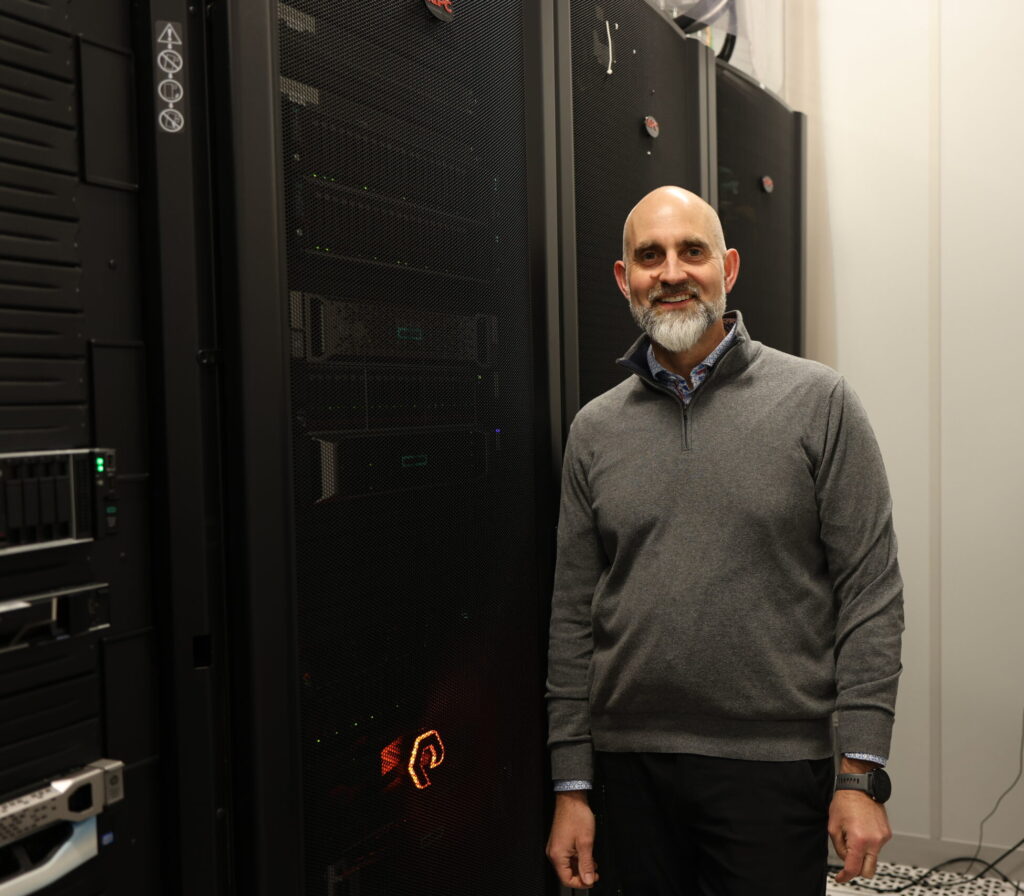
The data centre houses the central nervous system of MIC’s technological infrastructure. Similar to the way your body’s brain and spinal cord constantly transmit and receive signals, the centre receives and processes digital information from all of MIC’s clinics. “We try to make it as fast as possible,” says Jeff Vandersteen, MIC’s director of technology and innovation.
When you have an X-ray or ultrasound — or any other diagnostic imaging — your images are sent to one of MIC’s two data centres in Edmonton. They go first to the networking hub, which is connected to all of MIC’s 15 clinics. Then, they run through the Picture Archiving and Communication System (PACS) servers.
When our radiologists check your exam, the images return to the networking hub before they’re streamed, within seconds, to a workstation for viewing. Millions of diagnostic-imaging exams are then backed up and stored in archiving units. “It shows how technology is a critical component of our work,” Vandersteen says.
“The Industrial Revolution of Radiology”
It’s a vast change from 20 years ago, when Vandersteen was hired to help MIC transition from film-based imaging to digital.
When MIC’s Century Park clinic opened in 2007, it was the first fully digital clinic in Edmonton. This meant radiologists had images immediately, and patients received results soon after. Radiologists at different sites could view exams simultaneously, which allowed for consultation.
“I think of it as the Industrial Revolution of radiology,” Vandersteen says. “It really allowed for moving the work anywhere and at anytime, and allowing the best radiologist (for the situation) to be able to look at the images,” he says.
Across Alberta, the foundation for digital transformation was due largely to the efforts of now-retired MIC radiologist Dr. Bill Anderson. A well-known leader in the medical community, Dr. Anderson was key in securing federal and provincial funding — and developing the framework — to establish a digitized system in Alberta.
Leading the Way in Technology
Tina Anderson has seen three decades of innovation at MIC. Anderson, who started as a receptionist in 1997, is now leading some of that advancement. Today, as manager of clinical applications, her role includes new software implementation and training.
With technological change, “we’re able to do our work better, faster, stronger than before,” she says.
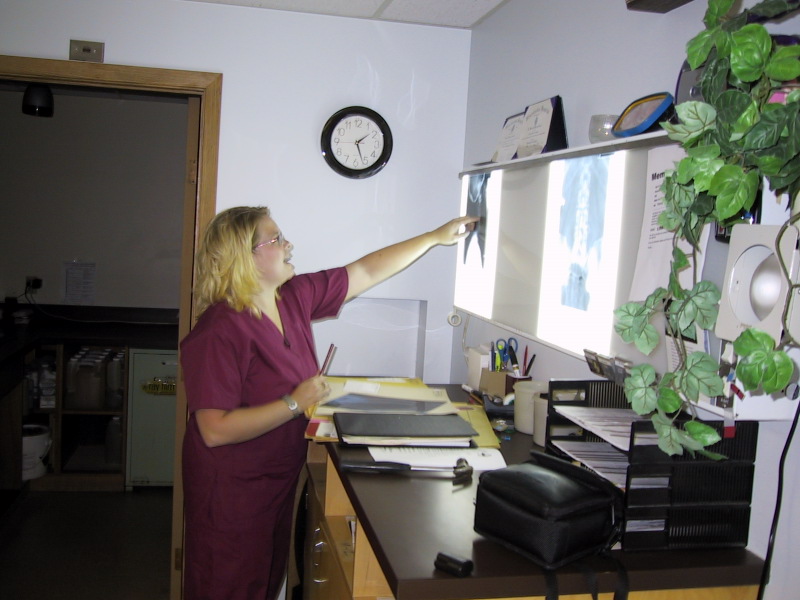
Anderson remembers when work wasn’t efficient: appointments were scheduled in binders; images were processed to film; X-rays were mounted on light-box viewers so radiologists could see and report exams; transcriptionists typed reports dictated on cassette recordings. “It’s just unreal when you think about the ways we used to work,” she says.
And if patients had previous exams that needed review before their appointment, Anderson says that meant a trip to the film storage vault. “We had a pager. If another patient walked in while we were down there, someone could page us with that film bag number so we could pull that too,” she says. “When (obstetric) patients came to get their baby pictures, we would pull the film bag and literally use scissors and cut it out of the film,” she adds.
Back then, patients and their doctors had to wait days for their results, Anderson says. These days, through our Patient Connection portal, MIC patients can book appointments and view results quickly. They also receive notifications about their exams and important updates via text message.
Radiologists can access images immediately, then dictate reports that are automatically transcribed. And because MIC radiologists interpret and report exams from all acute-care hospitals in the Edmonton region, we’ve also introduced new technology that consolidates hospital and clinic cases. The software curates a daily work list for each radiologist. It considers factors such as responsibilities at a given site as well as individual skill sets.
MIC is also at the forefront of user testing and adopting province-wide initiatives, Anderson says. The company was the first diagnostic-imaging provider to work with a new Alberta Health repository for image archiving, for example, she says. “We’re not afraid to take the lead. It also allows us to have a voice in how products are being developed and used,” Anderson says.
And when it comes to diagnostic imaging technology, too, MIC is often ahead, installing Alberta’s first, and only, community-based PET CT scanner at its Century Park clinic. It combines two types of imaging in one exam to better assess vital function and body structures.
Looking to the Future
As MIC’s director of technology and innovation, Vandersteen isn’t content when things are simply functioning; he’s always looking for ways to do things better. “It’s important to keep being curious and being open to exploring ideas,” he says.
That includes piloting ways to incorporate AI, such as helping radiologists report cases more efficiently, and as a second set of eyes when evaluating mammograms. But Vandersteen cautions that any use of AI must be used responsibly.
Today, 20 years after bringing MIC into the digital age, Vandersteen is positioning MIC for another challenge: “Building on our reputation as a leader in diagnostic imaging, and being seen as a leader in technology and innovation.”