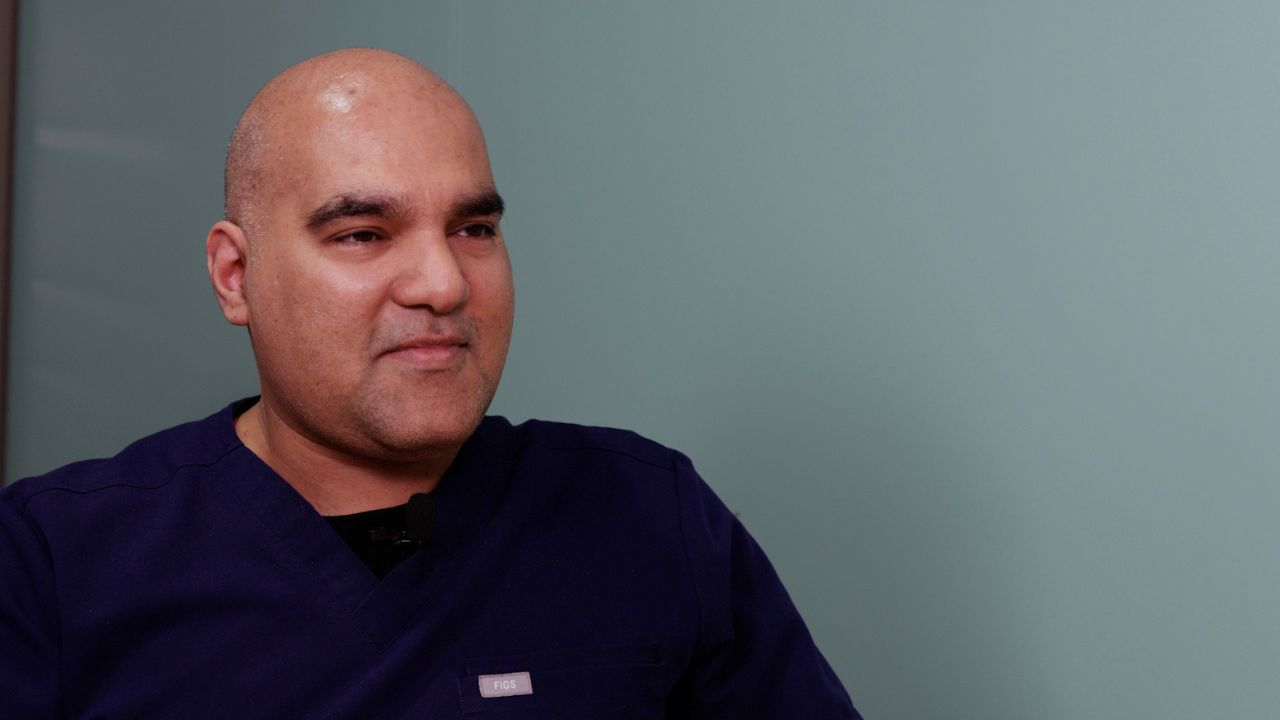
In Conversation With: Dr. Karim Samji
Medical imaging is expanding rapidly, but its ultimate impact depends on the expertise of physicians who interpret scans, guide interventions, and educate. Having completed medical training in London and Edinburgh, followed by subspecialty fellowships in Toronto and Ottawa, Dr. Karim Samji brought a wealth of international experience to Alberta.
Today, as an assistant professor at the University of Alberta and body imaging subspecialist with MIC Medical Imaging, Dr. Samji splits his time between reading scans, mentoring residents, and helping shape national healthcare policy.
Watch The Interview with Dr. Karim Samji:
Cultivating Diagnostic Independence in Residency Education
Dr. Samji’s educational philosophy centers on practical mentorship, guiding residents from foundational image interpretation during early rotations to complete diagnostic independence.
Training extends beyond the reading room into real-time image-guided procedures using ultrasound and Computed Tomography (CT). Under close supervision, residents master procedural mechanics alongside critical safety protocols, risk mitigation, and pain management.
Through MIC Medical Imaging’s hybrid practice model, residents work between acute tertiary hospitals and community clinics. The dual exposure teaches students to navigate distinct clinical workflows and understand the full spectrum of practice environments before entering full-time positions.
Advancing Quality Improvement and Systemic Standards
Beyond daily clinical teaching, Dr. Samji inserts healthcare accountability into the curriculum through resident-led quality assurance projects. Rather than focusing solely on basic research, these initiatives audit existing clinical workflows, such as procedural informed consent documentation, to evaluate whether safety standards are consistently met.
This emphasis on continuous quality improvement teaches students to critically evaluate practice efficiency, safeguard patient safety, and maintain high institutional standards.
Streamlining Cancer Care Through National Policy
In hospital practice, Dr. Samji routinely participates in multidisciplinary oncology consensus conferences, collaborating with surgeons, oncologists, and pathologists to chart precise treatment plans for complex cases.
Recognizing systemic delays in initial cancer staging, Dr. Samji chaired a national expert panel for the Canadian Association of Radiologists to author evidence-based imaging guidelines for suspected cancers. Bringing together radiologists, oncologists, family physicians, epidemiologists, and patient advocates, the panel established clear protocols to help primary care providers order the correct diagnostic test on the first attempt—eliminating redundant testing, preserving healthcare resources, and expediting the time from presentation to treatment.
Precision Imaging and Minimally Invasive Interventions
The clinical value of these guidelines is necessary in high-stakes diagnoses like suspected pancreatic cancer. High-resolution CT serves as the frontline tool, quickly establishing disease staging and distinguishing aggressive pancreatic ductal adenocarcinomas from benign conditions or lower-grade neuroendocrine tumors.
When tissue confirmation is required, radiologists rely on real-time ultrasound-guided biopsies. By placing a needle directly into a target mass or suspicious liver lesion under active imaging, clinicians extract diagnostic tissue samples without open surgical intervention, drastically reducing recovery times, minimizing procedural risk, and allowing many patients to return home the same day.
By pairing direct bedside teaching and quality improvement with national guideline development, Dr. Samji is advancing radiology standards on two fronts: training capable, decisive physicians and establishing clearer, faster diagnostic pathways for patients nationwide.