Breast Cancer Facts in Canada:
- About 1 in 8 women will develop breast cancer during their lifetime.
- Breast cancer is the most common cancer among women (excluding non-melanoma skin cancers).
- On average, 87 women will be diagnosed with breast cancer every day.
- On average, 15 women will die from breast cancer every day.
- Source: Canadian Cancer Society
Breast Cancer Screening Saves Lives: A Personal Story
Kandis DeColle was 50 when she had her first screening mammogram. Based on changing guidelines and her personal risk factors, she and her doctor didn’t see a need for earlier screening, she says.
But that appointment eventually led to her unexpected breast cancer diagnosis in 2024. “Once it hits, everything becomes quiet. Everything becomes loud. Everything just stops,” says DeColle of that life-changing moment.
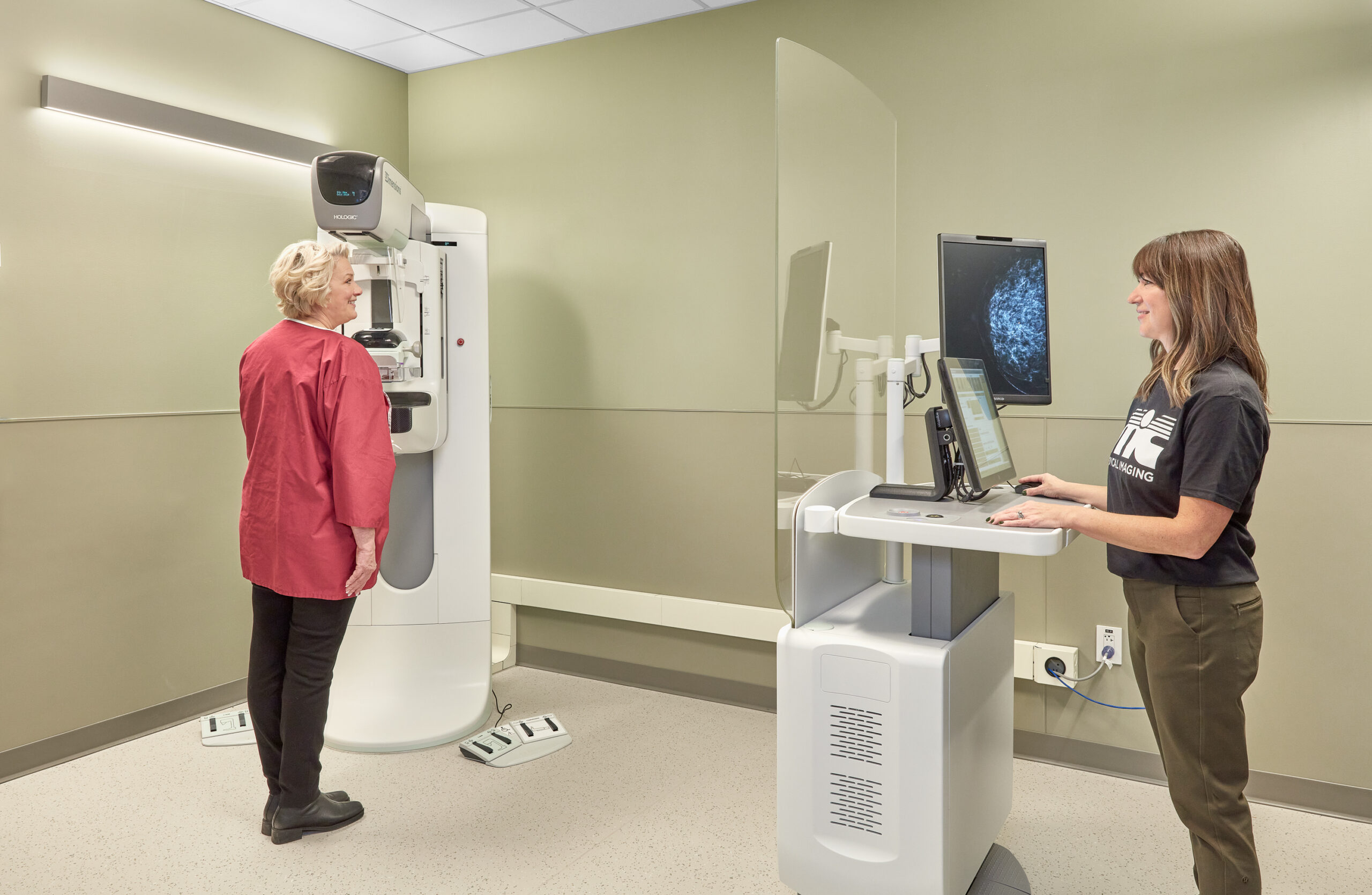
At first, she says there was no concern. Her mammogram looked normal. DeColle then had an Automated Breast Ultrasound (ABUS) because the mammogram showed she had dense breast tissue. That supplemental screening, which helps radiologists assess dense tissue, found a suspicious spot.
“I wasn’t really worried about it. I mean, I had no lumps, no symptoms, nothing at all,” says DeColle, site manager at MIC’s Lakewood clinic and a former ultrasound technologist. She then had further assessment with a handheld, targeted ultrasound. Biopsy results confirmed cancer, says DeColle, who’s now healthy after treatment.
Advocating for Patients
MIC radiologist Dr. Shiela Appavoo has been advocating for patients like DeColle for years. She’s a leader in promoting earlier breast screening mammograms and additional screening for women with dense breasts.
About 75 to 80 percent of breast cancers are found in women who don’t have identifiable risk factors, Dr. Appavoo says. “On a regular basis, we see patients who did not get screened in their 40s, and they now have a later-stage cancer,” she says.
Dense tissue puts people at higher risk for breast cancer, she says. It’s also more difficult to detect cancer in dense tissue with mammograms alone. “It’s like looking for a snowball in a snowbank,” Dr. Appavoo says.
“Changes to provincial guidelines are welcome.”
Dr. Shiela Appavoo
Earlier this year, the provincial government announced it was lowering the age for breast cancer screening. Starting April 1, 2027, Albertans can “self-refer” for mammograms, beginning at age 40.
This means they won’t need a requisition from their health care practitioner. Currently, women aged 40 to 44 need a requisition for their first screening mammogram.
“Early detection is one of the ways we can catch cancer before it gets too late,” says Dr. Appavoo. “By screening, we can help decrease the harms of late-stage cancer, including the increased risk of aggressive, difficult treatment and the risk of death,” she says. Requisitions are still required for supplemental ultrasound screening, however.
“How we support patients really matters in those moments.”
For DeColle, her experience has prompted her to speak out. She wants others to know the importance of earlier screening, as well as supplemental screening for those with dense breast tissue.
“I think it’s important for women to know [about screening options] and to advocate for themselves and to have that diagnostic imaging,” she says.
As someone who has been both a health care provider and a patient, DeColle also wants to remind others that patients are often at their most vulnerable when they come in. “As technologists, what we say and how we support patients really matters in those moments.”