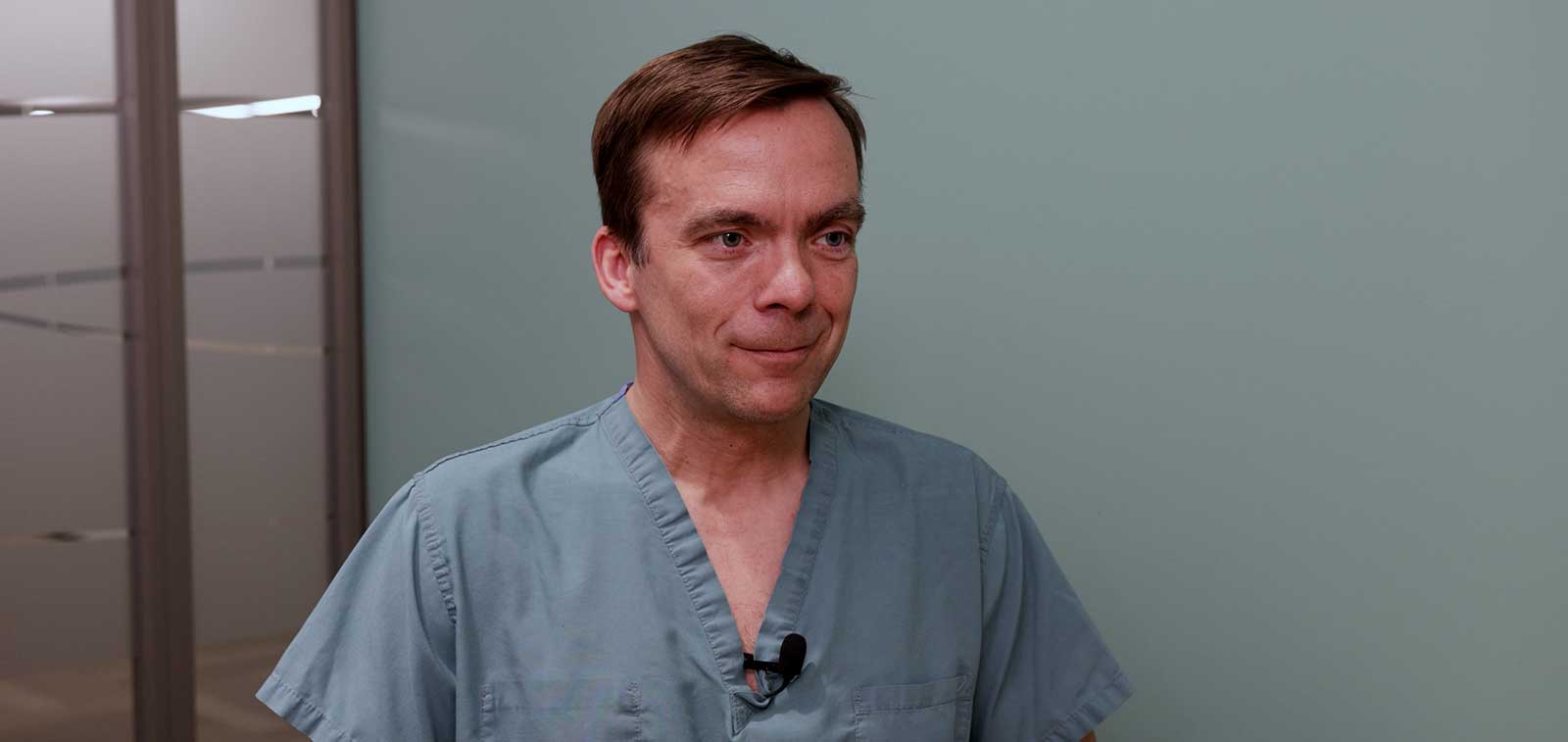
In Conversation with: Dr. Jacob Jaremko
Dr. Jacob Jaremko represents the future of modern diagnostics, helping evolve radiology from traditional image interpretation into a proactive tool for preventive medicine.
Serving as a radiologist and chair of MIC Medical Imaging’s AI steering committee, he leverages his unique background in civil and biomedical engineering to drive clinical innovations that directly improve patient outcomes.
Watch The Interview with Dr. Jaremko:
Decentralizing Specialized Care Through Portability
His current focus addresses a critical development in healthcare: the deployment of AI-enhanced handheld ultrasound technology; this specialized approach, which pairs sophisticated machine-learning algorithms with ultra-portable probes no larger than a smartphone, represents a shift in medical accessibility.
Dr. Jaremko emphasizes that in the context of remote medicine, moving diagnostics directly into the hands of community practitioners does not just close a geographical gap, it preserves the long-term mobility and quality of life for vulnerable patient populations.
Historically, identifying complex congenital conditions required immediate access to major urban hospitals, highly specialized technologists, and prolonged scheduling windows.
Dr. Jaremko’s work centers on developmental dysplasia of the hip (DDH), a malformation of the joint where early detection is entirely critical.
Streamlining Diagnostics at the Point of Care
While a standard infant hip ultrasound protocol traditionally demands precise examination by an expert, his refined, AI-assisted method allows a non-specialist to capture an accurate scan. The integrated software acts as an immediate triage tool, instantly validating normal development or flagging anomalies for urgent specialist review.
A primary focus of his advocacy centers on the impact of universal screening. In Alberta, approximately four infants are born every day with DDH, yet the province also performs two adult hip replacements daily to treat its long-term, degenerative effects.
Dr. Jaremko argues that establishing standardized, rapid-response screening protocols at birth is essential to mitigating this immense clinical burden, effectively replacing invasive, late-stage orthopedic surgeries with simple, early-life interventions.
Expanding the Scope of Point-of-Care Ultrasound
The implications extend well beyond pediatric orthopedics. The same core principles of automated, point-of-care ultrasound are currently being adapted for obstetric monitoring, basic echocardiograms, and critical screenings for thyroid and breast cancer within rural clinics.
Dr. Jaremko is also actively exploring the technology’s utility in emergency and community settings to diagnose acute musculoskeletal injuries, such as rotator cuff tears, without requiring an immediate trip to a major hospital.
Maintaining Human Oversight in Clinical AI
Dr. Jaremko maintains a sharp distinction between clinical diagnostic tools and the “generative” AI models utilized for creative media.
He emphasizes that while data processing can occur in seconds, the absolute zero-tolerance policy for “hallucinations” in medicine demands rigorous, deterministic boundaries.
The technology must remain strictly overseen by physicians who are bound by the Hippocratic Oath to prioritize individual patient safety over statistical averages.
The Future Role of the Radiologist
Looking toward the future of the discipline, Dr. Jaremko views the integration of AI as an increasingly proactive tool in healthcare.
He explains that the modern radiologist will transition to supervising these digital systems, ensuring that diagnostic accuracy, human oversight, and patient care remain the prominent priority of the Canadian healthcare system.