Bone Scan Exam Prep
Find out when you book
Bone Scan Locations
Find out when you book
Medically reviewed by Dr. Eric Lenza, MDCM, MSc, FRCPC
What is a bone scan?
A bone scan is a common nuclear medicine test. It can be used to detect fractures, infections, and cancer, among other conditions.
If you’ve been injured and your healthcare practitioner suspects you’ve broken a bone, the first step is an X-ray. X-rays are good at spotting visible damage, such as breaks or dislocations. But nuclear medicine scans can detect bone conditions before they show up on other imaging tests.
Bone scans can be used to assess:
- Hard-to-see fractures
- Infections
- Arthritis
- Cancer
- Bone conditions such as Paget’s disease
How does a bone scan work?
Bone scans use a small amount of radioactive material, or radioisotope, to help produce images. The cameras detect that radiation, and a computer uses the information to form 2D and 3D images.
How are my bones assessed?
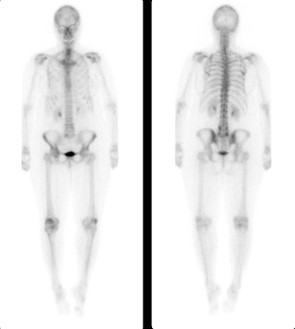
The radioisotope is combined with a “carrier” substance that binds to bone. The radiotracer collects in areas of increased or abnormal bone “activity,” or metabolism. On a bone scan, these areas show up as “hot spots.” Higher levels of activity can be due to bone healing, inflammation or cancer.
How should I prepare for a bone scan?
No special preparation is required. You can eat and take any medication as usual.
Be sure to drink plenty of water before and after the exam. This will help clear the leftover radiation from your body through urine. After your bone scan, you do not need to take any special precautions. The dose of radiation in your body is low and should disappear within 24 hours.
What to Expect During a Bone Scan
- A bone scan is a two-part exam. When you arrive for your appointment, our technologist will take your medical history and explain the procedure.
- You may be asked to change into a gown when you arrive for your exam.
- You’ll be given an injection of radiotracer. This part of the appointment will take about 15 minutes.
- You may then leave the clinic for around 2.5 hours. This gives the radiotracer time to attach to your bones. During this time, you can go about your daily activities.
- When you return for your bone scan, expect to be at the clinic for another hour.
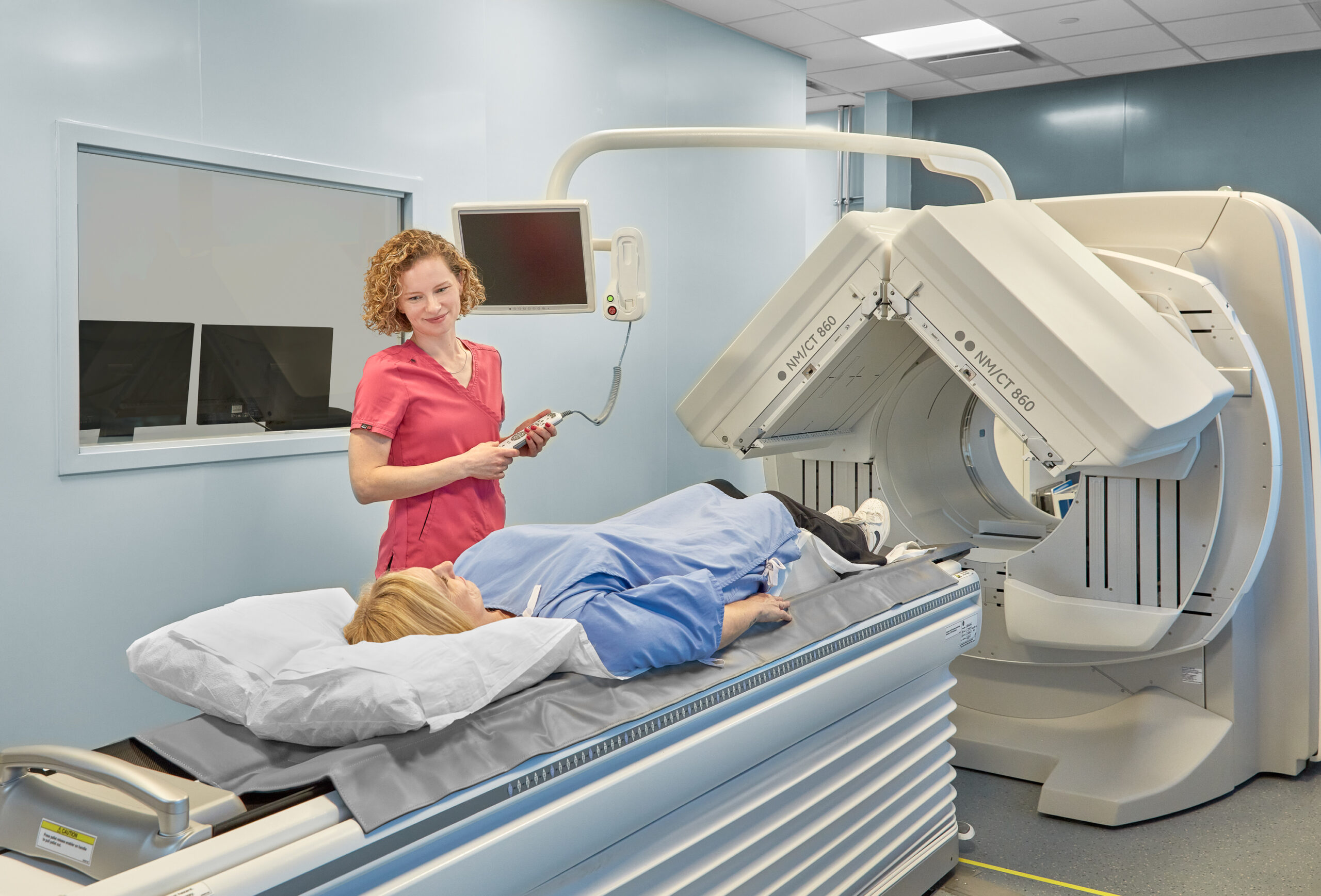
- During the exam, you’ll lie on the scanner bed as the cameras rotate around you.