A Strong Partnership With NAIT
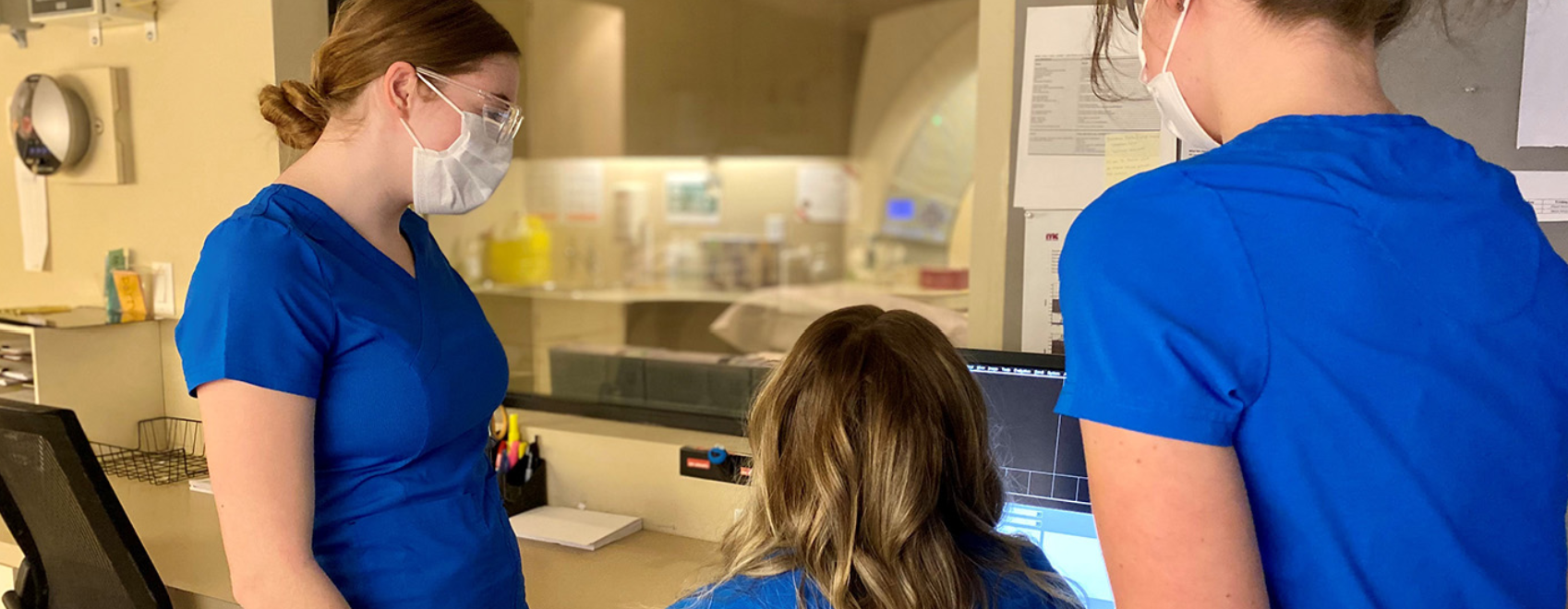
It’s been four-and-a-half years since Aaron Sutley graduated from NAIT’s Medical Radiologic Technology program, but he still remembers the anxiety of being a student.
That’s something he keeps in mind when helping to train the next generation of X-ray technologists who rotate through MIC’s Century Park clinic as part of their practical training.
Sutley says seeing students develop skills and gain confidence is something that makes him smile. “It’s very fulfilling, knowing that they are going to be in the profession and working with patients, who could be your mom or dad,” he says.
“Preceptors take our students under their wings and really help them develop.”
Front-line teaching offered by technologists – such as Sutley and his MIC colleagues – is key to preparing NAIT students for a career in health care, says Terry Schlitter, dean of the School of Health and Life Sciences at NAIT.
At the polytechnic, students are taught the essential knowledge and skills of their field, and gain practice in labs. But that can’t replace clinical experience with patients, she says.
“When students first get on site, they’re pretty new and nervous, and those preceptors take our students under their wings and really help them develop,” Schlitter says. MIC radiologists also teach NAIT students during their hospital and clinic rotations.
The collaboration between NAIT and MIC is mutually beneficial. NAIT grads make up the vast majority of MIC’s technologist workforce. And Sutley, who’s MIC’s clinical educator for radiography, also appreciates the emphasis NAIT instructors place on patient care and teamwork. “That’s very, very important in the health-care industry.”
Students Get a Head Start
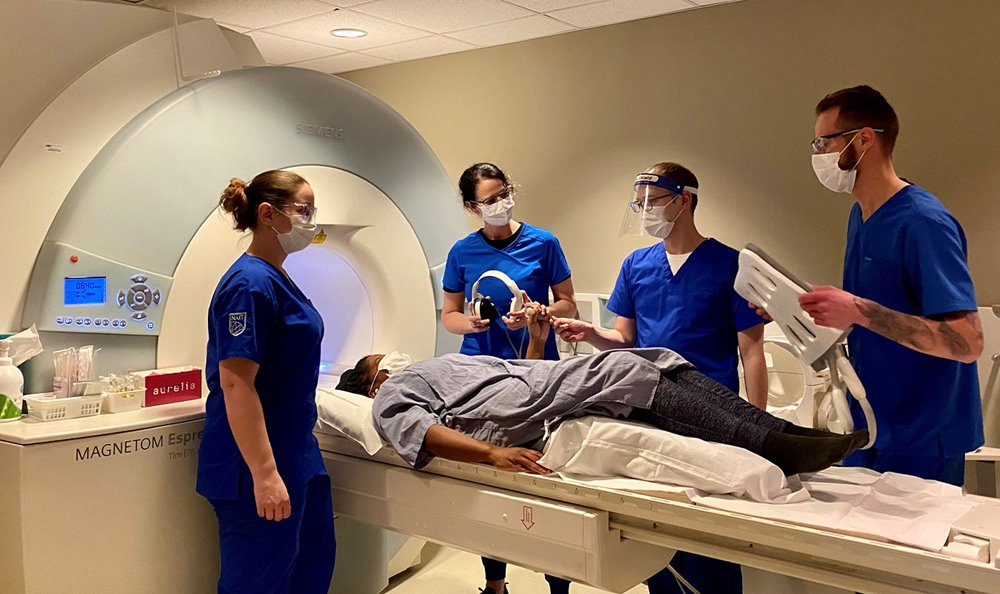
MIC also runs programs to support NAIT students even before they start their clinical rotations. During evening labs at MIC, Magnetic Resonance Imaging students – who only have access to a simulator at NAIT – practice on a functional magnet, at either MIC’s Terra Losa or Century Park clinic, under the supervision of their instructor. The evening labs are offered four days a week between January and April.
And NAIT’s Diagnostic Medical Sonography students also have a chance to gain more hands-on experience before starting their practicum. Once or twice a month, MIC offers extra practice sessions for ultrasound students at one of its clinics, during non-operational hours. The students, who are supervised by experienced technologists, typically get a chance to scan obstetrics on a volunteer as well.
Scanning a pregnancy is one of the most challenging exams for ultrasound students, says Allison Rose, ultrasound team leader at MIC’s Lakewood clinic. “I remember my first obstetrics scan as a student, when I saw a baby’s heart beating. It was just overwhelming,” says Rose, who helps coordinate the practice sessions.
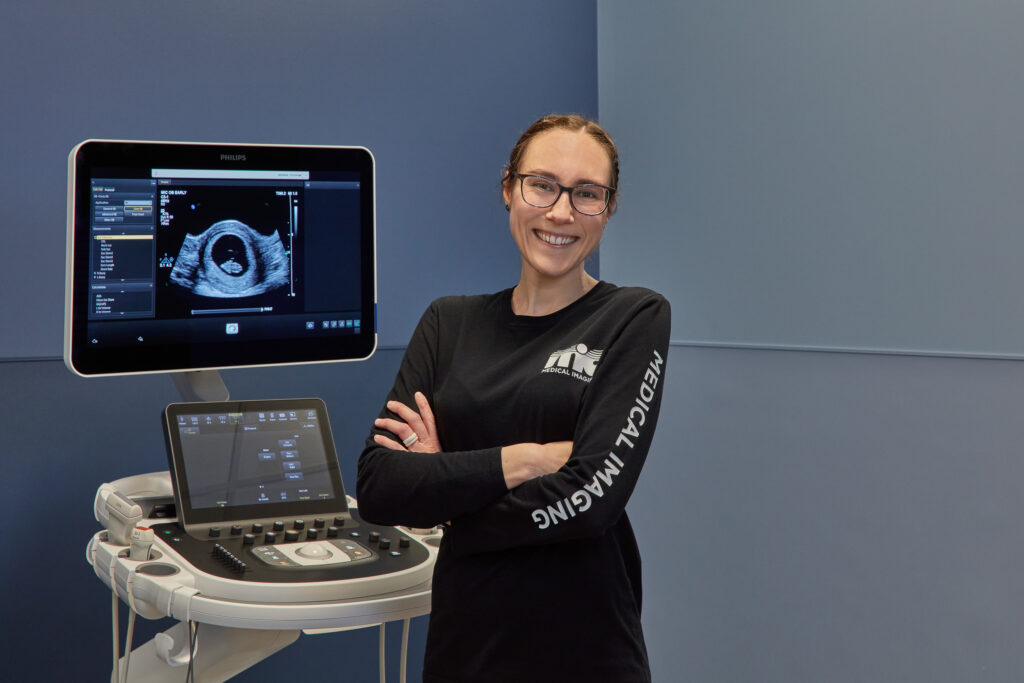
“If we can introduce that experience in a controlled environment and a more relaxed setting,” students have time to gain confidence, she explains, adding NAIT is always open to working with MIC to enhance student learning.
It’s these types of investments by MIC that make the company one of NAIT’s most valued partners, says Schlitter at NAIT. MIC also provides feedback on curriculum development and lab simulation exercises, ensuring students are learning to industry standards, she says. “We wouldn’t be able to run our programs if we didn’t have partnerships, like (we have with) MIC.”