MIC Radiologists Help Patients Far From Home
A man with a watermelon-sized tumour. A mother needing surgery after a difficult birth. A child who couldn’t play soccer because his legs had grown twisted.

For nearly 20 years, radiologist Dr. Greg Raymond has been helping patients like these on the other side of the world – all from his Edmonton office. “I firmly believe that you need to do things that you don’t get paid for and that are giving back” to others, he says.
He and other radiologists at MIC Medical Imaging interpret and report diagnostic imaging for patients in sub-Saharan Africa, on a volunteer basis. They review X-rays, CT and ultrasound exams done aboard two hospital vessels operated by Mercy Ships, an international humanitarian group.
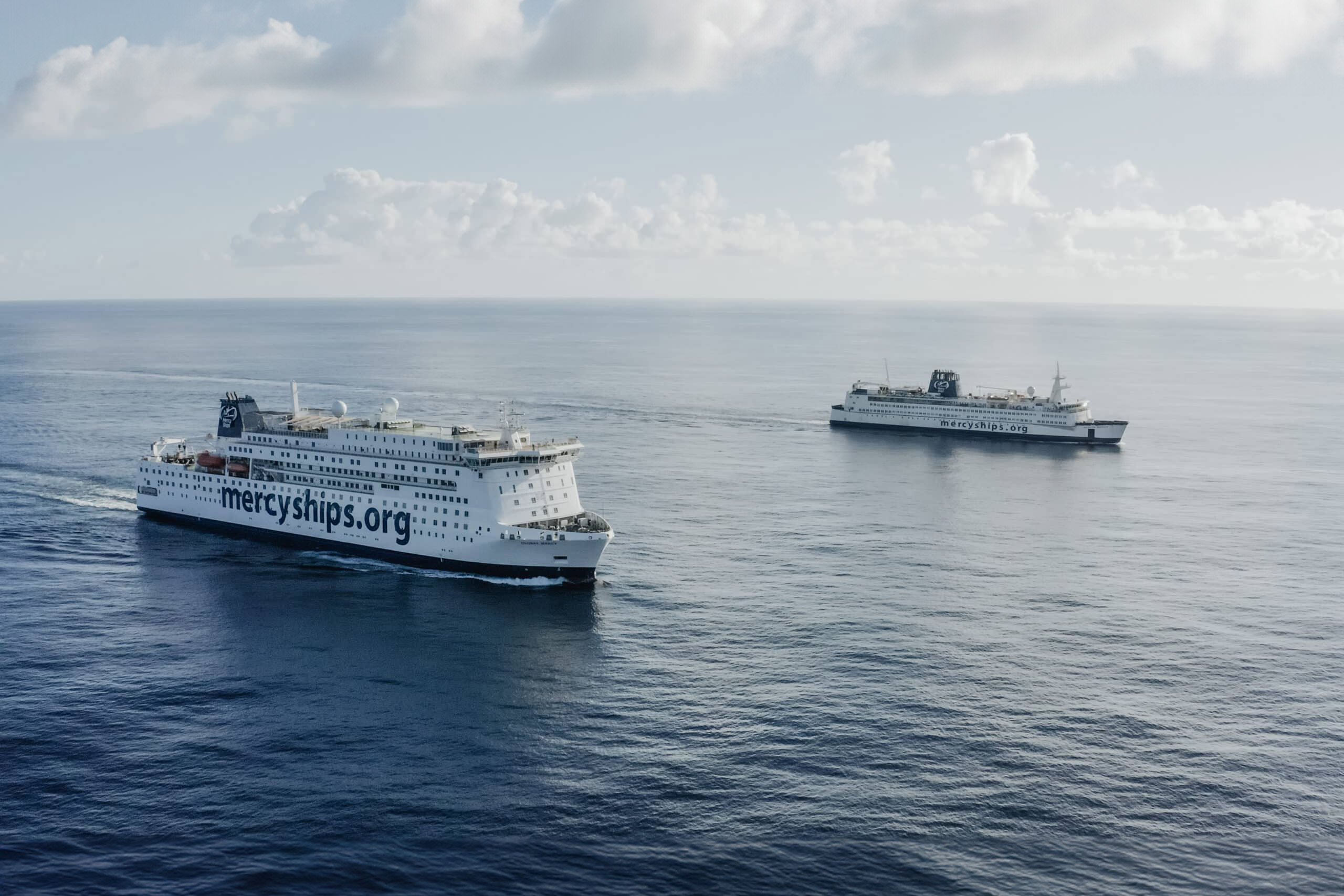
Mercy Ships’ floating hospitals travel along the coast of Africa, docking for 10 months at a time. On board, trained volunteers from different countries provide medical care, including life-altering surgeries, dental procedures, and diagnostic imaging, for people in some of the world’s poorest regions.
“To help people in a country where there’s no (accessible) surgery or health care — and we’re really their last hope — is a whole other level,” Dr. Raymond says. “And to be able to do that from 10,000 miles away is really amazing.”
A Desperate Plea For Help
In 2007, when Dr. Raymond first learned Mercy Ships was looking for radiologists, he didn’t hesitate to volunteer. A radiologist with the Canadian Armed Forces for 20 years – including many as the military’s chief of radiology – he had seen firsthand the results of poor health care in other countries.
Joining Mercy Ships was a way to help underserved areas, he says. For the first few years, he worked largely on his own, downloading cases from the ship’s archival system and reporting from his laptop at home.
Gradually, he recruited more MIC radiologists, including sub-specialists with expertise in areas such as pediatrics and neuroradiology, says Dr. Raymond, who sub-specializes in cardiothoracic imaging.
In 2014, MIC, as a radiology partnership, agreed to donate ongoing support for Mercy Ships. “I will forever be grateful,” he says of his colleagues’ unanimous support.
Radiologists aren’t the only ones at MIC who have supported the effort, Dr. Raymond says. MIC’s IT department collaborated with Mercy Ships to develop a more efficient system for sending and viewing images. And clerical staff at MIC’s Century Park and Terra Losa clinics have worked to organize and load cases into the system.
Life-changing work
Over the years, MIC radiologists have interpreted thousands of cases, helping doctors on board the ships diagnose and treat patients, and plan life-changing surgeries. Other times, diagnostic imaging brings unwelcome news, Dr. Raymond says. If the patient’s condition is beyond treatment, the medical team can plan palliative care.
For Dr. Raymond, too, the volunteer effort has been life-changing.
“It’s a real blessing to know that you’re making a difference.”