MIC Radiologists Provide an Essential Service
As a young radiologist starting out, Dr. Tom Ackerman remembers packing his bags for trips to rural and remote areas of Alberta, where he and his MIC colleagues provided essential radiology services.
They travelled as far as Peace River and even Whitehorse, flying there and spending days at local hospitals, interpreting X-ray and ultrasound exams, and performing barium studies and interventional procedures.
“Often, if you were going for the day (to rural Alberta), you and the ultrasound technologist would just get in the car and drive to wherever,” recalls Dr. Ackerman, now managing partner with MIC Medical Imaging.
Thirty years ago, with limited radiology services outside major centres, he says that was the best option for some patients.
Expanded Areas of Expertise
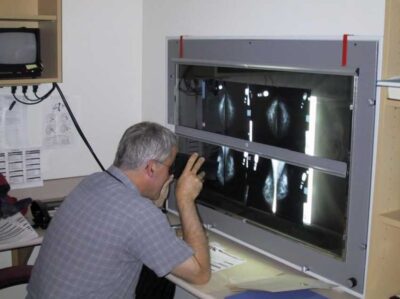
Today, MIC continues to support diagnostic imaging in hospitals, though we’re now focused on the growing Edmonton region. In addition to their work at MIC’s clinics, our radiologists also interpret X-rays, ultrasound, MRI, nuclear medicine, CT and PET scans at all acute-care hospitals in the Edmonton region. They also perform interventional procedures and image-guided biopsies.
Our history of supporting hospitals runs deep, going back to before we became MIC in 1996. Thirty years ago, MIC was formed through the merger of four radiology groups in the Edmonton area. Each of those groups provided radiology services for a local hospital. When MIC was established, those hospital connections were reinforced, Dr. Ackerman says.
With more radiologists, the expanded company could provide enhanced coverage, including better on-call service. There was a larger pool of sub-specialists with expertise in specific areas, such as pediatrics, neuroradiology, cardiothoracic and breast imaging.
For radiologists dealing with complex or unusual cases, Dr. Ackerman says the expanded pool of expertise was and remains a valuable resource. “And now, it’s way easier – with a click on the computer – we can get a sub-specialty opinion on anything we want, because we have that sort of depth and breadth of expertise,” Dr. Ackerman says.
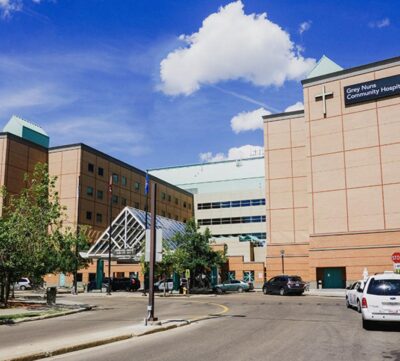
At the Grey Nuns and Misericordia Community Hospitals, the affiliation with MIC is helpful because it brings a level of standardization, says Meghan Mior, senior director of diagnostic imaging and pharmacy services with Covenant Health. “This ensures that our patients receive consistent, dependable exam interpretations – no matter where their imaging is performed,” she says.
Many Covenant Health patients who require follow-up diagnostic imaging are seen at MIC clinics, Mior says. “By managing those routine or non-urgent, outpatient imaging, community clinics really divert that workload away from hospitals,” she says, which allows hospitals to focus on higher-acuity cases.
“You could do everything, which is great.”
Looking back on his 33-year career, Dr. Ackerman says he appreciates the value of MIC’s hospital affiliation. Radiologists gain experience at hospitals in diverse areas, including complex and acute cases, while also rotating through MIC’s 15 clinics.
He says this variety of work offers flexibility in charting their career paths. “I loved the ability to do both types of work,” Dr. Ackerman says. “You weren’t stuck doing just one small area of practice. You could do everything, which is great.”