A History of Trusted Community Care
Our story begins with a spirit of collaboration and the desire to find a better way forward.
And today, 30 years after MIC Medical Imaging was established, those values still hold true, says radiologist and MIC managing partner Dr. Tom Ackerman.
As he looks ahead, he’s guided by this question: “How do we make sure we remain a trusted provider in the city — the one that patients and referring clinicians choose with confidence?“
Over the past three decades, Dr. Ackerman, one of MIC’s founding partners, has seen the company grow to become one of the largest radiology partnerships in Canada.
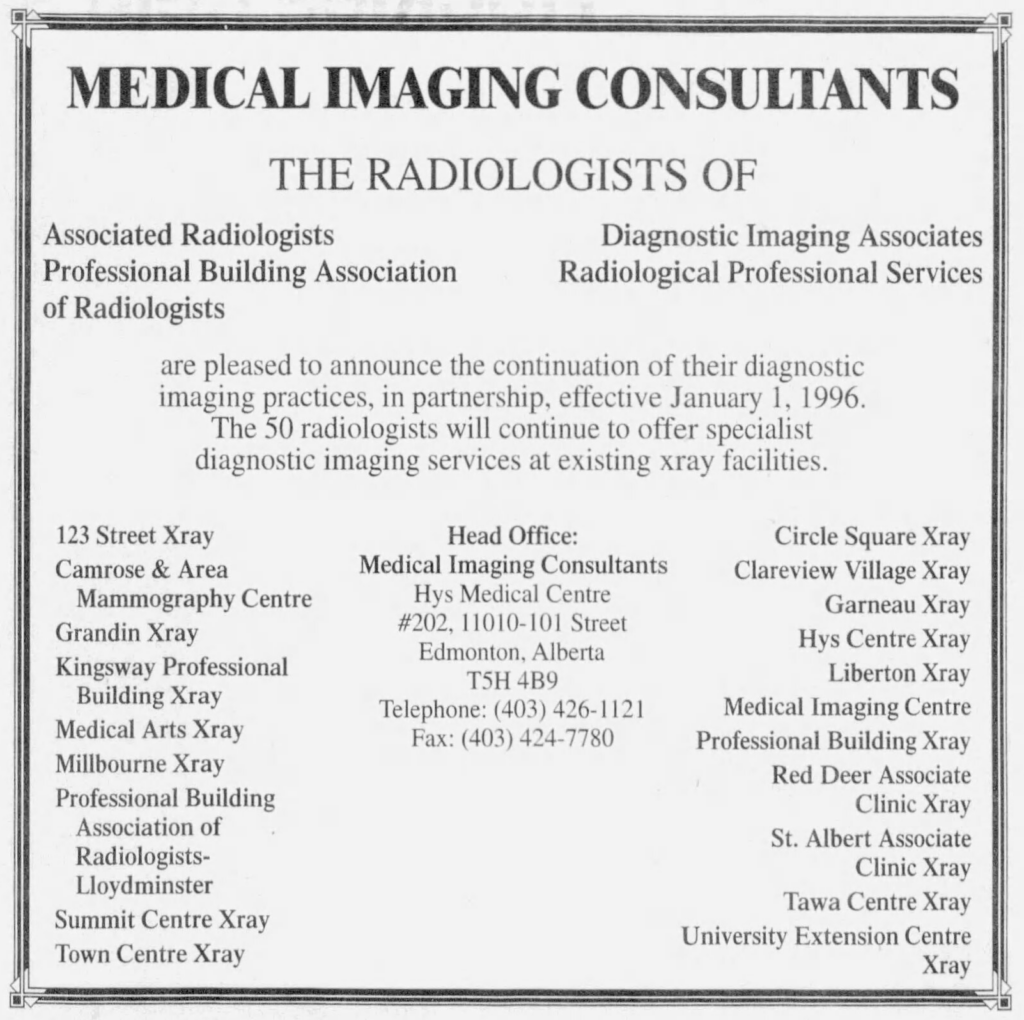
But MIC’s roots go back even further — to four well-established radiology groups in our community. In 1996, they merged to form MIC as a way to navigate changes in the healthcare landscape.
Taking Care of Our Communities
Since then, we’ve expanded our diagnostic-imaging services and locations to meet the needs of our communities, with 15 clinics in Edmonton and the surrounding region. MIC has more than 100 radiologists – many of them sub-specialized, offering expertise in areas such as pediatrics, breast, cardiothoracic, and MSK imaging.
Alongside them, 500 technologists and support staff work at MIC’s clinics. They offer MRI, CT, ultrasound, mammography, X-ray, and nuclear medicine scans, among other procedures. And MIC radiologists provide diagnostic and interventional radiology for all acute-care hospitals in the Edmonton region.
Against the Odds
But the MIC story is one that almost didn’t happen, says Dr. Bill Anderson, a now-retired founding partner who helped broker the merger. The early-to-mid-1990s were a tumultuous period for health care in Alberta. Significant cutbacks in spending and restructuring of administrative regions had upended the status quo.
Around the same time, some specialized programs, such as obstetrics and interventional radiology, were shifted to different hospitals. Because each radiology group was affiliated with a specific hospital, it meant some radiologists would not be able to practice in their areas of expertise.
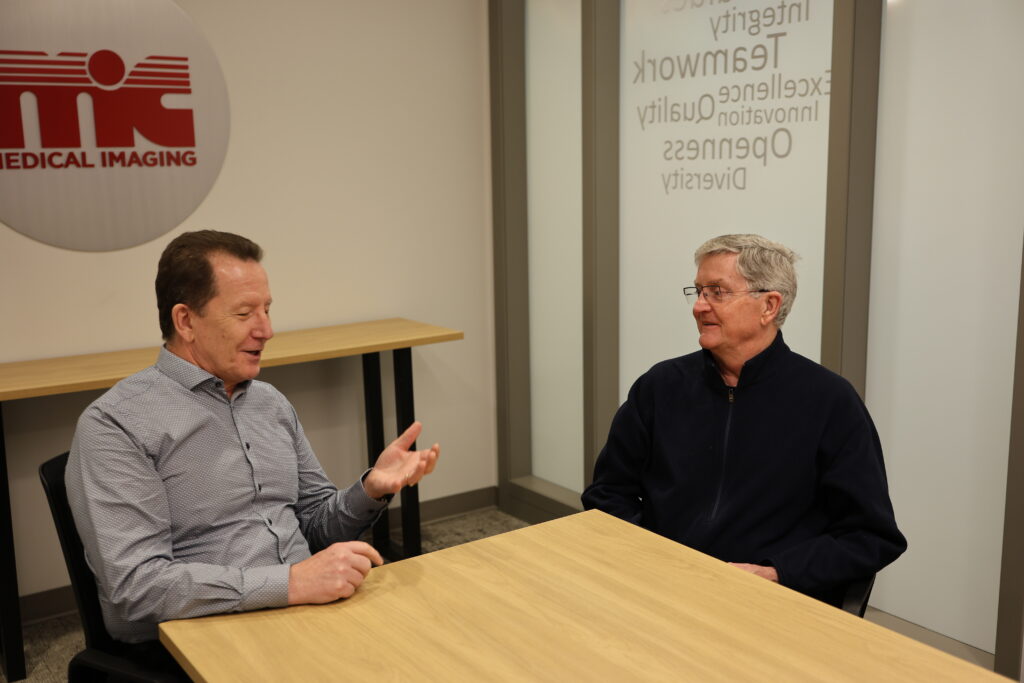
Confronted by these changes, Dr. Anderson says local radiology groups wondered if they could join forces to better advocate for radiologists and patients. They hired a consultant who, after reviewing the situation, declared merging was not feasible: The groups were just too different.
“He said, ‘You’re not going to merge. It’s not going to happen,’” Dr. Anderson recalls. At that point, he says one radiology group left the discussion, but the remaining four agreed to work together.
Despite the challenges of uniting four established companies – including ones that had been around for nearly 40 years – it turned out to be the right move, Dr. Anderson says. “When we merged, we all got better. We took the best practices from each and we morphed that across our system,” he says.
Growing with MIC
For Dr. Ackerman, the merger happened at the ideal time. In 1996, he was just a few years into his radiology career and eager to learn more.
With a larger practice, there were opportunities to be involved in diverse areas of diagnostic imaging, and to learn from a larger pool of mentors.
And patient care improved, he says, as radiologists were shifted to wherever their skillsets were needed, whether at hospitals or community clinics.
These days, MIC radiologists cover everything from community clinic scans to acute cases and interventional procedures at hospitals.
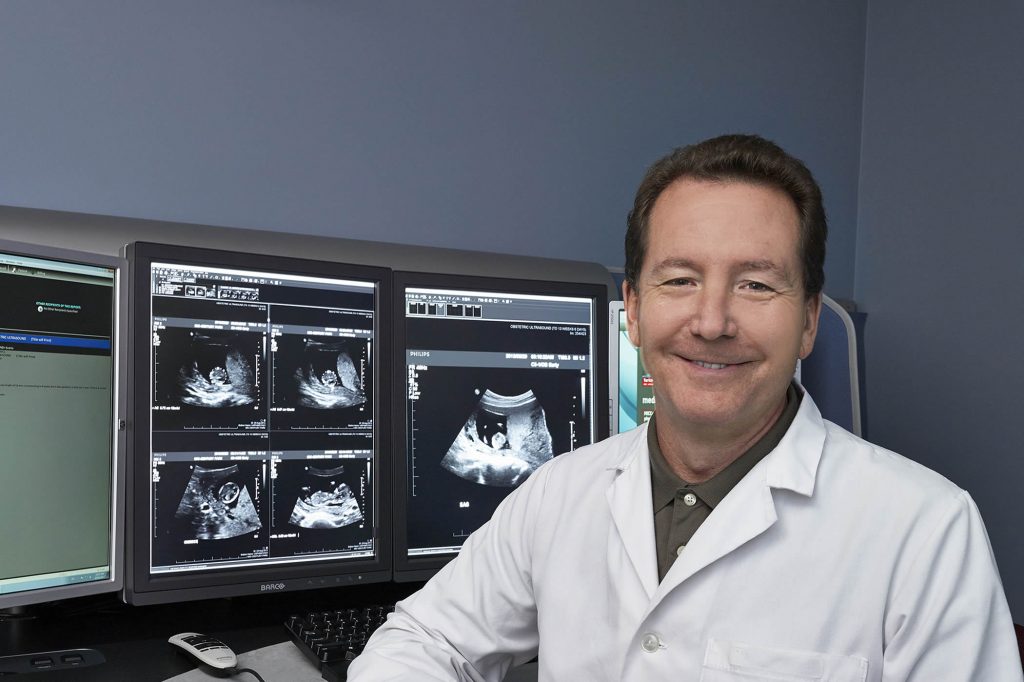
At the University of Alberta, they teach residents, fellows and medical students, as well as conduct research. And MIC radiologists also help train NAIT students, mostly during clinical rotations. “Whatever you want to do in radiology, this is the place you can do it,” Dr. Ackerman says.
As managing partner, Dr. Ackerman and his team are always looking for ways to do better, whether that’s investing in new technology and equipment, expanding services or building new clinics.
But he says he doesn’t want to lose sight of what’s equally important — maintaining the trust MIC has built with patients and their doctors. “We want patients to look at us and say, ‘They did a great job for me, and that’s why I want to go back there.’”